


Orders
.png&w=48&q=75 "login")
Profile


Wallet

Answering all your questions about Nestlé CERELAC®
 6 Likes|
 8 min
8 minIntroducing solids to babies is a big milestone - and naturally, it comes with a flood of questions for new parents. You may find yourself checking ingredient lists, wondering what’s included, what’s missing, and whether it is right for your baby.
Is there too much sugar? Are there any preservatives? Does it contain maida? Can it cause constipation? These concerns are completely valid.
At the end of the day, every parent wants to know one simple thing: is this a good choice for my baby during these crucial growing years?
In this article, we answer the most common questions parents have about Nestlé CERELAC, so you can make a more informed and confident decision.
What Are the Ingredients in Nestlé CERELAC® Baby Food?
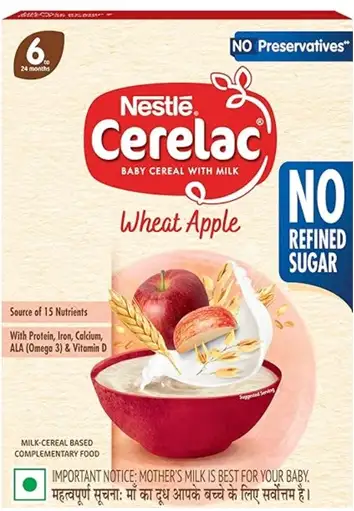
Nestlé CERELAC is made using grains like wheat, rice, oats, ragi, barley or corn, depending on the variant, milk and fruit or vegetables.
Grains provide energy for your baby’s growing body. Milk solids add protein and calcium, while fruit or vegetable concentrates bring in flavor and natural sweetness.
In addition, Nestlé CERELAC® contains no preservatives, no added colours and no flavours.
Since every CERELAC variant has a slightly different recipe, the ingredients and nutrition values may change from one variant to another. So, before choosing a variant - especially if your baby is trying an ingredient for the first time - it’s always best to read the label carefully.
What Nutrients Does Nestlé CERELAC Provide?
The ingredients might have given you a sneak peek, Nestlé CERELAC® is scientifically designed to support your baby’s growth and development during the complementary feeding stage. Cerelac is rich in Iron & Protein and in total contains 15 key nutrients which are important when babies are growing and developing fast
These nutrients help support:
Brain and cognitive development
Iron supports cognitive development, while Omega-3 fatty acids support brain development.
Bone and muscle growth
Protein supports muscle growth, while Calcium and Vitamin D help support bone growth.
Immune system function
Vitamins A, C and Zinc help support normal immune function.
CERELAC® is designed to be a part of a varied diet, working alongside breastmilk and the home foods you are introducing. But as always please take your paediatrician’s advice before introducing any new foods.
Does Nestlé CERELAC Contain Maida?
No, Nestlé CERELAC® does not contain maida, also known as all-purpose flour.
Cerelac is made with grains such as wheat (atta), rice, oats, ragi, barley or corn, along with milk and fruits or vegetables, depending on the variant.
Since CERELAC comes in different variants, the exact grain mix may differ between variants. So, it is always a good idea to check the ingredient list on the specific variant you are buying, especially before introducing it to your baby for the first time.
Does Nestlé CERELAC Contain Preservatives, Colors or Flavors?
In compliance with FSSAI Food for Infant Regulations, Nestle CERELAC does not contain any preservatives, added colours or flavors.
Parents like you can scan the QR code on the pack to view test details from independent NABL-certified laboratories. This helps parents verify the safety and quality information instead of relying only on the claims mentioned on the pack.
Does Nestlé CERELAC Have Too Much Sugar?
No, CERELAC does not have too much sugar or artificial sweeteners. According to Nestlé, the added sugar level in Nestlé CERELAC is well below the limits prescribed by both FSSAI and CODEX standards.
For parents who prefer no refined sugar options, Nestlé also offers a range of CERELAC No Refined Sugar variants. These variants do not contain refined sugar. Their sweetness comes naturally from ingredients like milk solids, cereals, and fruit or vegetable concentrates used in the recipe.
While checking any baby food label, it is important to understand the difference between total sugar and added sugar.
Added sugar means sugar added during processing, such as refined sugar, jaggery, glucose syrup, dextrose etc.
Naturally occurring sugar means sugar that is already present in the ingredients, such as lactose from milk and natural sugars from fruits, vegetables and cereal grains.
On nutrition labels, total sugars include both naturally occurring sugars and added sugars. So, if a product shows total sugar, it does not always mean all of it has been added separately.
For context, A medium banana contains around 14-15 g of naturally occurring total sugar, while a medium apple contains around 16 g of total natural sugar. Both obviously have zero Added sugars.
Now to understand food labels let’s take an example. 1 serving of CERELAC® Wheat Apple Carrot No Refined Sugar variant contains 6.7 g of Total Sugars that come naturally from ingredients present in the recipe, but 0 g Added Sugars.
Does Nestlé CERELAC Cause Constipation in Babies?
No, Nestlé CERELAC® is not known to cause constipation.
Parents often ask this because constipation can sometimes happen around the time babies start complementary feeding. But this phase also brings many changes at once - your baby is moving from a mostly liquid diet to solid foods, trying new ingredients, and their water intake may also change.
CERELAC® contains alpha amylase, a naturally occurring enzyme that helps break down complex carbohydrates into simpler forms. This makes it easier for a baby’s developing digestive system to process, making CERELAC® easy to digest for babies. Similar enzymes are also naturally found in foods like sprouted grains, mangoes, and bananas.
That said, every baby is different. If your baby experiences constipation after introducing any new food, it’s best to speak to your pediatrician to understand the actual cause and get the right guidance.
Is Nestlé CERELAC Safe for Babies?
Yes, Nestlé CERELAC is made keeping baby safety in mind and follows the safety standards set by FSSAI. CERELAC contains no preservatives, no added colours and no flavours.
According to Nestlé, CERELAC® batches undergo 47 quality checks. Its safety and shelf life are maintained through a controlled process:
a. Raw material checks:
Safety checks begin at the ingredient level. Milk is tested for contaminants such as aflatoxins, heavy metals, antibiotics and pesticides, while grains and other ingredients are screened for microbial and chemical safety.
b. Manufacturing process:
During manufacturing, CERELAC goes through heat treatment to help remove microbes. It is then dried to reduce moisture, which helps prevent bacterial growth.
c. Final packaging:
During final packaging, oxygen is removed from the pack. This helps protect freshness and prevent oxidation without the need for chemical antioxidants.
At Mylo, we always recommend parents read the pack label, follow the preparation and storage instructions carefully, and consult their pediatrician before introducing any new food to their baby.
Final Thoughts: Is Nestlé CERELAC a Good Choice for Growing Babies?
Nestlé CERELAC can be a good baby food choice during your baby’s growing years when babies need additional nutrition along with breastmilk.
It provides 15 essential nutrients, including Iron, Protein, Calcium, Vitamin D and Omega-3 fatty acid ALA, which support physical growth, brain and cognitive development and immunity. It also does not contain preservatives, added colors or flavors, in compliance with FSSAI Food for Infant Regulations.
What also adds reassurance is that CERELAC goes through 47 quality checks at multiple stages - from raw material testing to manufacturing and final packaging.
That said, every baby is different. So, parents should always choose the right variant as per the baby’s age, read the label carefully, follow preparation instructions, and consult their pediatrician before introducing any new food.
That said, CERELAC® is not intended to replace breastmilk or home-prepared foods. It is designed to be part of a balanced complementary feeding routine, typically alongside breastmilk and a variety of age-appropriate home foods.
Ultimately, the right feeding choice is the one that aligns with your baby’s stage of development, nutritional needs and your pediatrician’s recommendations.
References:
• What Mothers Should Know About Nestlé CERELAC | Cerelac
• Which Nestlé CERELAC Stage Is Right for Your Baby? | Cerelac
• How we ensure Nestlé CERELAC is safe for your baby | Cerelac
You may also like: How Does Cerelac Maintain Its Shelf Life Without Added Preservatives?
Article Posted Under
Related Articles
Punjabi Baby Boy Names: The Complete Guide With Meanings (ਪੰਜਾਬੀ ਮੁੰਡਿਆਂ ਦੇ ਨਾਮ)
 8 min
8 min Malayalam Baby Names: The Complete Guide With Meanings (മലയാളം കുഞ്ഞുങ്ങളുടെ പേരുകൾ)
 10 min
 Marathi Baby Names: The Complete Guide With Meanings (मराठी बाळांची नावे)
 9 min
9 min Baby Names Starting With A for Boys & Girls: Meanings, Religion, Rashi & Nakshatra
 8 min
8 min
Related Topics
.webp&w=32&q=75)
Medical Disclaimer
This content is for informational purposes only and should not replace professional medical advice. Consult with a physician or other health care professional if you have any concerns or questions about your health. If you rely on the information provided here, you do so solely at your own risk.


AWARDS AND RECOGNITION

Mylo wins Forbes D2C Disruptor award

Mylo wins The Economic Times Promising Brands 2022
AS SEEN IN












- Mylo Care: Effective and science-backed personal care and wellness solutions for a joyful you.
- Mylo Baby: Science-backed, gentle and effective personal care & hygiene range for your little one.
- Mylo Community: Trusted and empathetic community of 10mn+ parents and experts.


Product Categories
Baby Carrier | Baby Soap | Baby Wipes | Stretch Marks Cream | Baby Cream | Baby Shampoo | Baby Massage Oil | Baby Hair Oil | Stretch Marks Oil | Baby Body Wash | Baby Powder | Baby Lotion | Diaper Rash Cream | Newborn Diapers | Teether | Baby Kajal | Baby Diapers Pants | Cloth Diapers | Laundry Detergent | Lactation Granules |